Your Complete Guide to Residential Housewraps

CEO/Customer Rep
CEO/Customer Rep
Since 2000, I’ve been passionate about quality craftsmanship and treating every project like my own home. After years as a manager and job supervisor, My brother and I started Smucker Exteriors in 2015 to provide honest, top-quality exterior work with a personal touch.
Outside of work, I love spending time with my family and being active in my church. These values—faith, integrity, and hard work—are the foundation of Smucker Exteriors.
Let’s build something great together!
What is a Housewrap—And Why Do I Need One?
Housewraps are a protective barrier installed between the wooden exterior of your home and your home´s siding or cladding.
Sometimes, called water-resistive barriers (or WRBs), housewarps are made of specialty polyethylene fibers that are spun to form a continuous, breathable sheet. This sheet protects your home’s wooden exterior and interior walls from potential moisture damage—most commonly from wind-driven rain, snowmelt, and condensation from your home’s interior (more on that below).

How Do Housewraps Work?
A housewrap serves two basic functions:
- Housewraps repel water from heavy rains and snow melt
- Housewraps allow interior condensation to evaporate and escape through the wrap
Both of these functions play a vital role in keeping your home’s interior dry—thereby preventing mold, mildew, and rot.
All of which are needlessly expensive and stressful to remediate.

Do I Need a Housewrap for My Home?
Yes.
In fact, housewraps are a construction requirement for modern homes. That’s because no matter how water repellent your exterior cladding is (siding, stucco, etc.), no siding material is 100% effective at preventing water from reaching the exterior sheathing of your home.
That said, some older homes were built before housewraps became a requirement. In these instances, it usually isn’t cost-effective to remove your exterior siding to install one.
However, if you do replace your exterior cladding, it is imperative that your contractor remediates existing moisture damage and installs a new housewrap during that process.
What is Housewrap Permeability?
Vapor permeability refers to the ease with which moisture can evaporate through the walls of your house to the exterior air surrounding your home.
Often referred to as your home’s ability to “breathe,” permeability ratings are incredibly important. When exploring housewrap products and manufacturers, seek a permeability rating of 10–20. This range allows moisture from inside your home to safely make its way through the housewrap while still repelling outside “bulk water.”
What is Bulk Water?
Bulk water refers to windblown rain and snowmelt from outside your home trying to make its way in. Housewraps are designed to reflect bulk water while also allowing interior condensation to pass through as a vapor.
What Are the Differences Between Commercial and Residential Housewraps?
Commercial and residential housewraps generally serve the same purpose. However, they do have one important difference: UV resistance.
As commercial construction projects tend to take much longer than residential builds, a housewrap rated for longer UV exposure should be used. Otherwise, the wrap can degrade after being left out in the sun for weeks or months while the project is completed—harming its integrity and ability to protect the structure from moisture damage.

What Are the Primary Differences Between Housewraps?
Aside from installation, housewraps have a few distinguishing factors:
- Woven vs. Non-Woven: Non-woven housewraps are generally more durable, tear-resistant, and provide superior water holdout. Woven housewraps—made of interlaced strands of polypropylene—have tiny holes which allow high permeability. However, they can be less effective at resisting bulk water.
- Drainage Capability: Standard (flat) wraps sit against sheathing and are suitable for siding with high drainage capacity (like vinyl or fiber cement with a rainscreen). Drainable wraps feature built-in spacers, crinkled textures, or filaments that create gaps and allow for water removal 100 times faster. These wraps are recommended for stucco, brick, and stone, which can all hold water against the house.
- Vapor Permeability: Different permeability levels describe how quickly water can dry through the housewrap—with higher permeability great for evaporation (but maybe lacking in exterior protection), and lower numbers better for exterior shedding than internal vaporizing.
- UV Resistance: Residential-grade housewraps may only last 3-4 months in full sun exposure, whereas commercial wraps can last 6–12+ months.
- Installation Style: Housewraps come in two main types: sealed-and-taped housewraps, or peel-and-stick, each with its own unique set of pros and cons (outlined below).
How Are Housewraps Installed?
Housewraps come in two main product categories—each with different installation practices.
Sealed and Taped Housewraps
Many conventional housewraps are installed using construction staples, nails, or screws. Seams are then overlapped with a 4-inch or 6-inch material sealed with a specialty tape provided by the manufacturer.
The benefit of seal-and-tape housewraps is the cost. But while these wraps are significantly cheaper than self-adhering products (more below), installation is time-consuming, and, while seal-and-tape housewraps are designed to function properly with the use of fasteners, they do not offer the same level of protection as modern peel-and-stick products.
Self-Adhering Housewraps
Without the need for additional fasteners and overlay seams, peel-and-stick (self-adhering) housewraps are rising in popularity.
These products provide a superior protective seal, but do require meticulous attention when being applied, as smoothing out air bubbles, ensuring the material is straight and aligned with every piece, and dealing with a sticky product can create challenges (making working with a crew experienced in self-adhering housewrap installation a necessity).
Self-adhering housewraps are also more expensive, and usually cost 3–5x the amount of sealed-and-taped products.

What is a Drainable Housewrap?
Drainable housewraps are products that combine a water-resistant outer layer with a drainage gap. This gap facilitates the drainage of “bulk water” away from the walls of your home.
Homeowners should use drainable housewraps in each of the following instances:
- You live in an area getting 20+ inches of rain per year
- You’re installing fiber cement, cedar, engineered wood, brick, or rock siding, as these products can either rot or hold moisture against the wall
Is Housewrap Insulating?
By definition, housewrap is not insulation. Housewrap is an exterior water-resistive barrier that helps prevent moisture from making its way into the wooden walls of your home. It is not an energy-conserving barrier between your home’s interior and exterior environment.
Is Housewrap Installed Before Insulation?
No. Housewrap is the final barrier applied to your home before the exterior siding or cladding is installed.
Is Housewrap Waterproof?
Housewraps are not technically “waterproof”—and shouldn’t be.
The housewrap’s primary function is to repel water away from the wooden sheathing of your home—something they do remarkably well. However, they are also designed to allow water through them as a vapor. This lets interior moisture evaporate into the air surrounding your home.
What Are the Best Housewraps for My Home?
There are many reputable housewrap brands available for both residential and commercial construction projects.
Here are three of the most popular:
- Tyvek from DuPont: You’ve likely seen it before. Tyvek is a non-woven housewrap that’s cost-effective, breathable (perm rating of 54), and quick to install using staples or nails. It’s been a popular solution for many years—and for good reason. It’s a proven, reliable product that’s been in use since 1955.
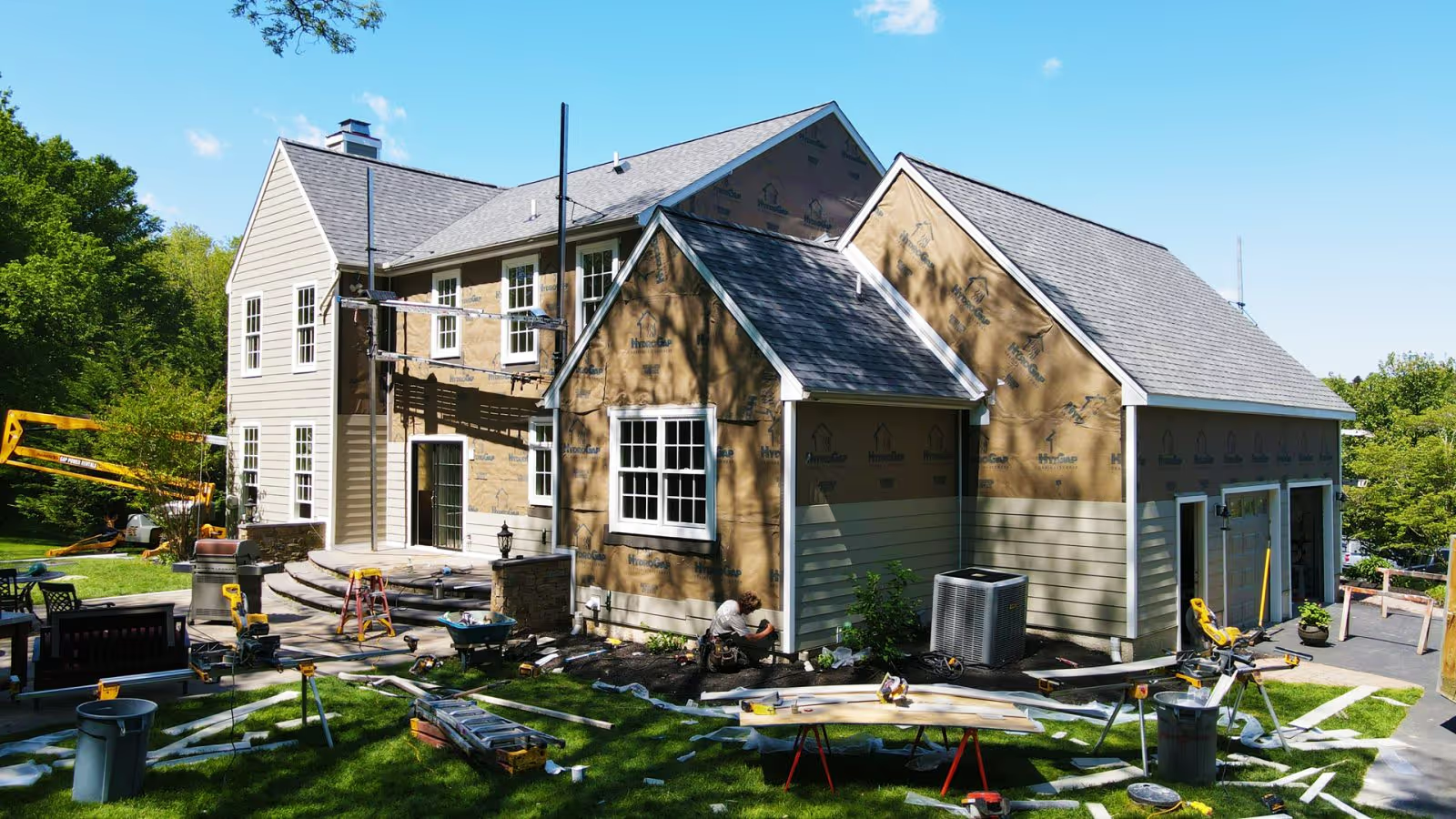
- HydroGap from Benjamin Obdyke: HydroGap is a leading drainable housewrap featuring 1mm compression-resistant spaces for additional drainage between your housewrap and home’s sheathing (100x more bulk water drainage than other drainable housewrap products!). Plus, HydroGaps perm rating of 16 is well within the recommended 10–20 range.
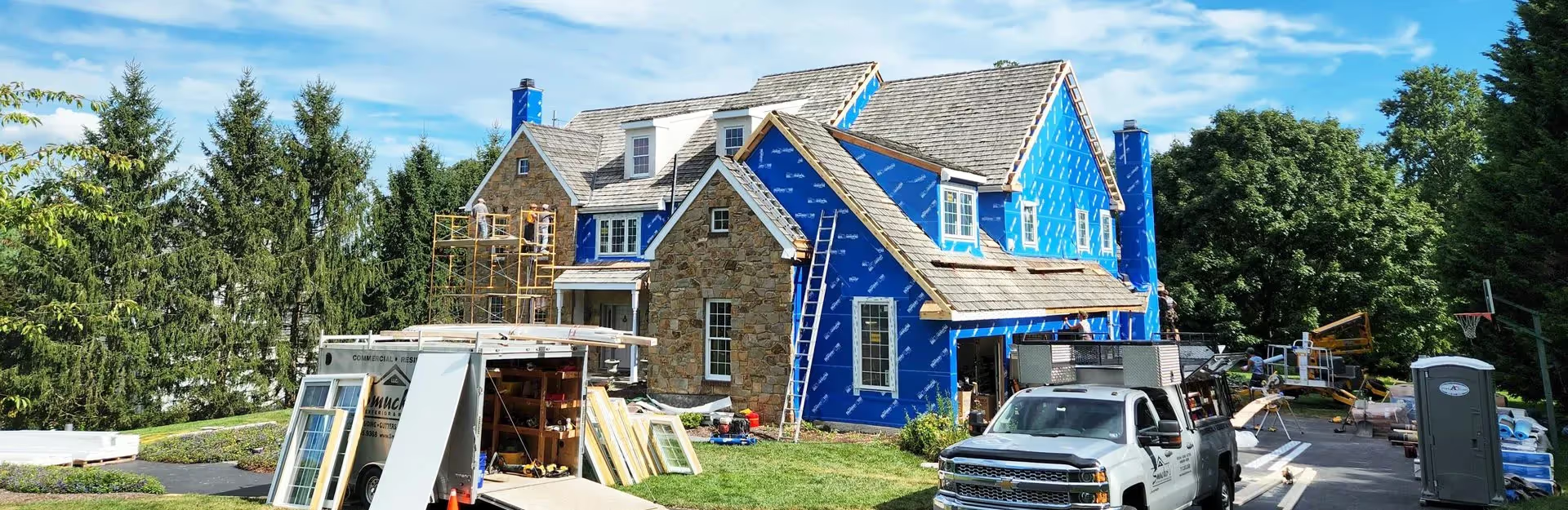
- Blueskin VP100 from Henry: Originally offered for commercial construction exclusively, Henry’s Blueskin housewrap is now available for residential projects—and we love it! Henry’s Blueskin is water-resistant and vapor-permeable—offering more than 95% drainage efficiency—and features the benefits of being an easy-to-install, peel-and-stick self-sealing housewrap.
Still unsure which housewrap is best for you? Speak with a knowledgeable exterior contractor today!
Still Have Questions About Your Future Housewrap?
If you have additional questions about housewraps, why we choose products like Tyvek, HydroGap, and Blueskin VP100, or which might be right for you, reach out to our friendly contractors for your free initial consultation and estimate today.
Our team is ready to answer all of your questions and make sure you´ve got an exterior that keeps your home safe, dry, and energy efficient for decades into the future—something we’ve been helping PA homeowners with for over 25 years.
And with a Lifetime Workmanship Warranty on any and all exterior work you approve, there’s no reason to wait.
Instead, reach out for your free quote today. We look forward to hearing from you and helping you get the exterior of your dreams.
Smucker Exteriors knows how important your home is—and our crews have been serving Pennsylvania homeowners with complete exterior remodels, including roofing, siding, new windows, doors, and custom decks for over 25 years. All of our work is backed by a Lifetime Workmanship Warranty and the assurance that comes from highly-skilled crews and reputable products—meaning there’s no reason to wait on getting your free quote in Lancaster, Chester, or Berks counties today! Reach out now!

Finance Your Home Renovations Today
There’s no need to let exterior damages worsen. Get a preapproved rate, compare repayment plans, and secure funding for your home improvement project today.
(Rate check takes less than 2 minutes and won’t affect credit score.)
.jpg)